

Golf Where the Sun Refuses to Set
A Scandinavian Escape You Haven't Considered Yet

There is a tee shot you can hit at half past midnight, in full daylight, with the Norwegian Sea breaking white against the dunes to your left and a thousand-year-old Viking grave sitting quietly between the fairways. No floodlights. No headlamp. Just the low gold sun that, for a few weeks each summer, forgets to go down.
Most golfers spend a lifetime chasing the same three or four destinations. Scandinavia is not usually one of them — and that is precisely the point. The people who know about it tend to keep it to themselves.
Let me change that for you.
The case for the North
Ask a well-travelled golfer where they would go for links and they will say Scotland or Ireland. Fair answers. But they are also the busy answers — the tee sheets booked a year out, the starter's hut with a queue, the sense that you are playing a place everyone has already played.
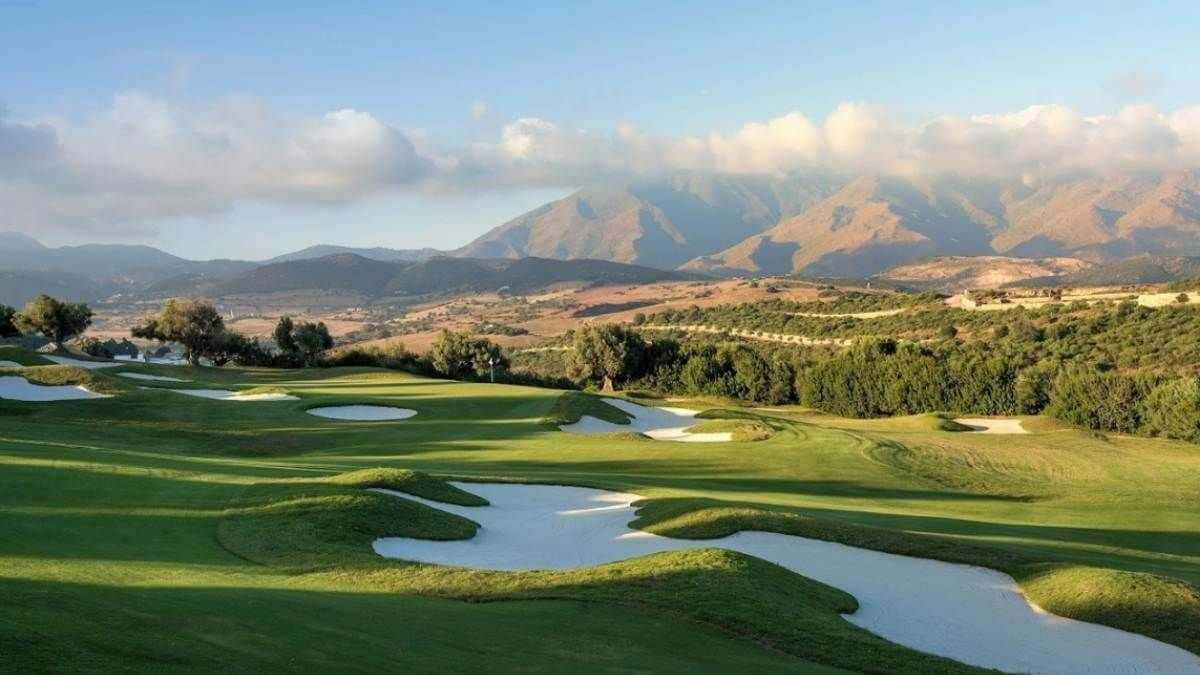
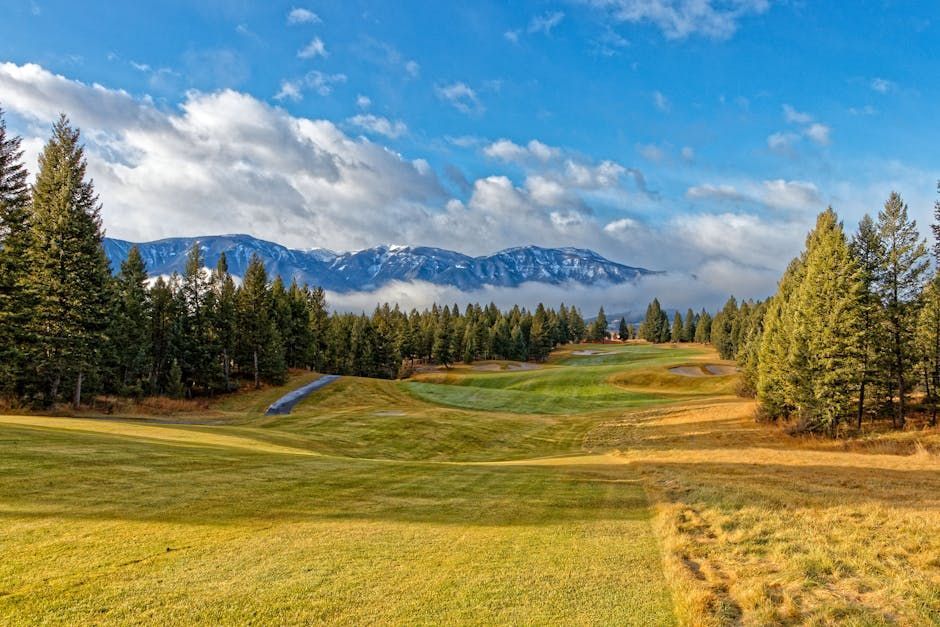
Scandinavia offers something the old links heartlands can no longer promise: space. Room to breathe. Courses laid across a landscape that feels genuinely wild, played in the company of people who came for the golf rather than the photograph. Add to that the long Nordic summer light — where a round after dinner is not a rush but a luxury — and the appeal starts to sharpen into focus.
This is golf for people who have already ticked the obvious boxes and want the next thing. The quieter, stranger, more memorable thing.
Here is where I would take you.
Denmark: the home game

I am biased, and I will own it — Denmark is home, and there is no substitute for a host who knows the ground under his own feet.
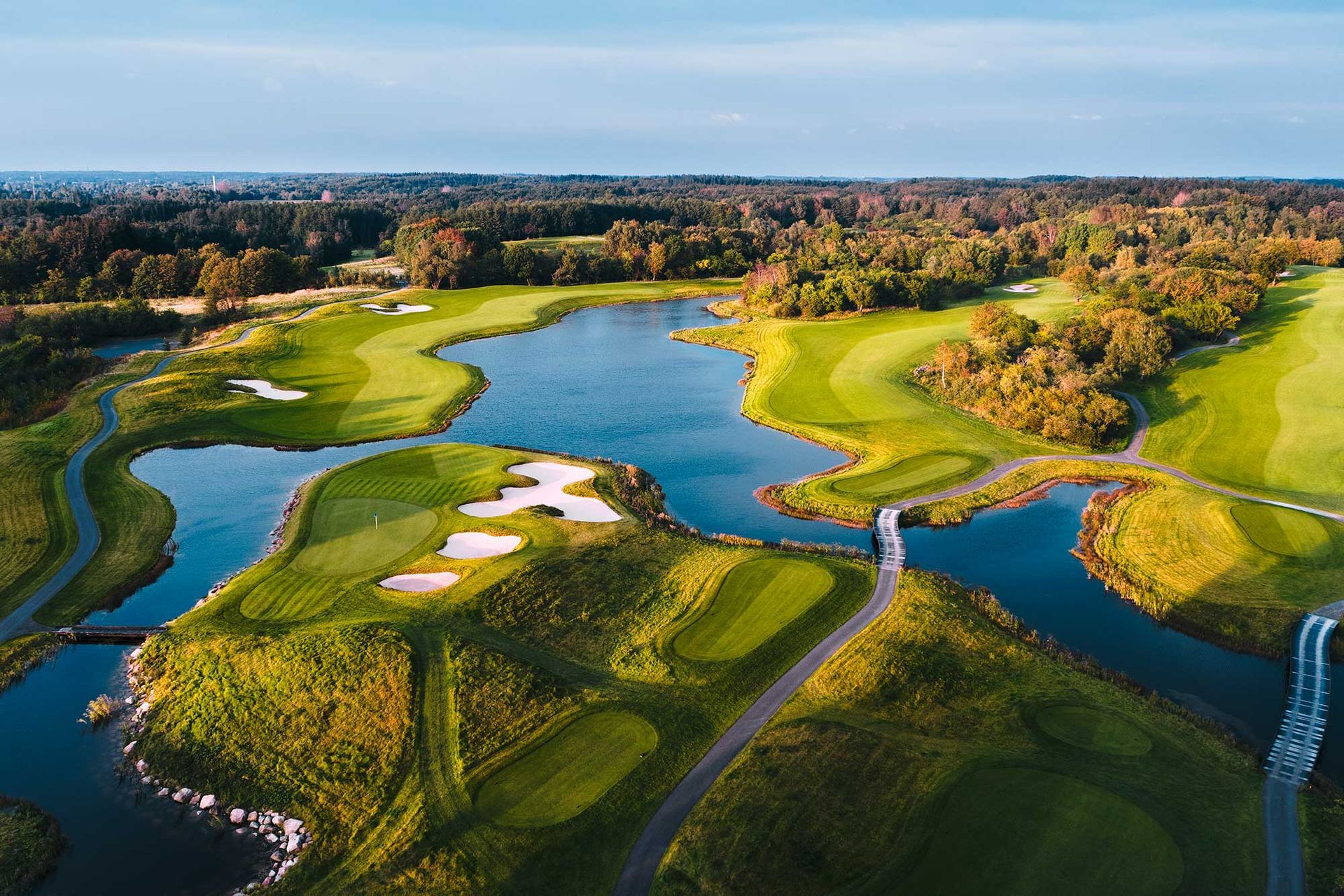
The country's golf has quietly grown up. This very week, the Danish Golf Championship is being contested at Great Northern in Kerteminde, on the coast of Funen. It is a DP World Tour stop, and the course — modern, exposed, shaped by the same wind that has always defined Danish links — is exactly the kind of place I love bringing guests. There is something particular about walking a fairway days after the world's best have played it, feeling the same crosswind read the same putt.
But Denmark is not one course. It is a rhythm. Heathland tracks that wind through pine and heather at Silkeborg in the lake district. The links-and-forest variety of Himmerland, which hosted European Tour golf for years and still carries that pedigree in its turf. And everywhere, the Danish way of doing hospitality — unhurried, warm, quietly excellent — that makes the nineteenth hole as good as the eighteen.
For a first taste of Scandinavia, Denmark is the gentle door in: easy to reach, effortless to move around, and close enough to my own front door that I can be there in person when it matters.
Sweden: the surprise nobody expects

Cross the bridge to Sweden and the golf changes character entirely.
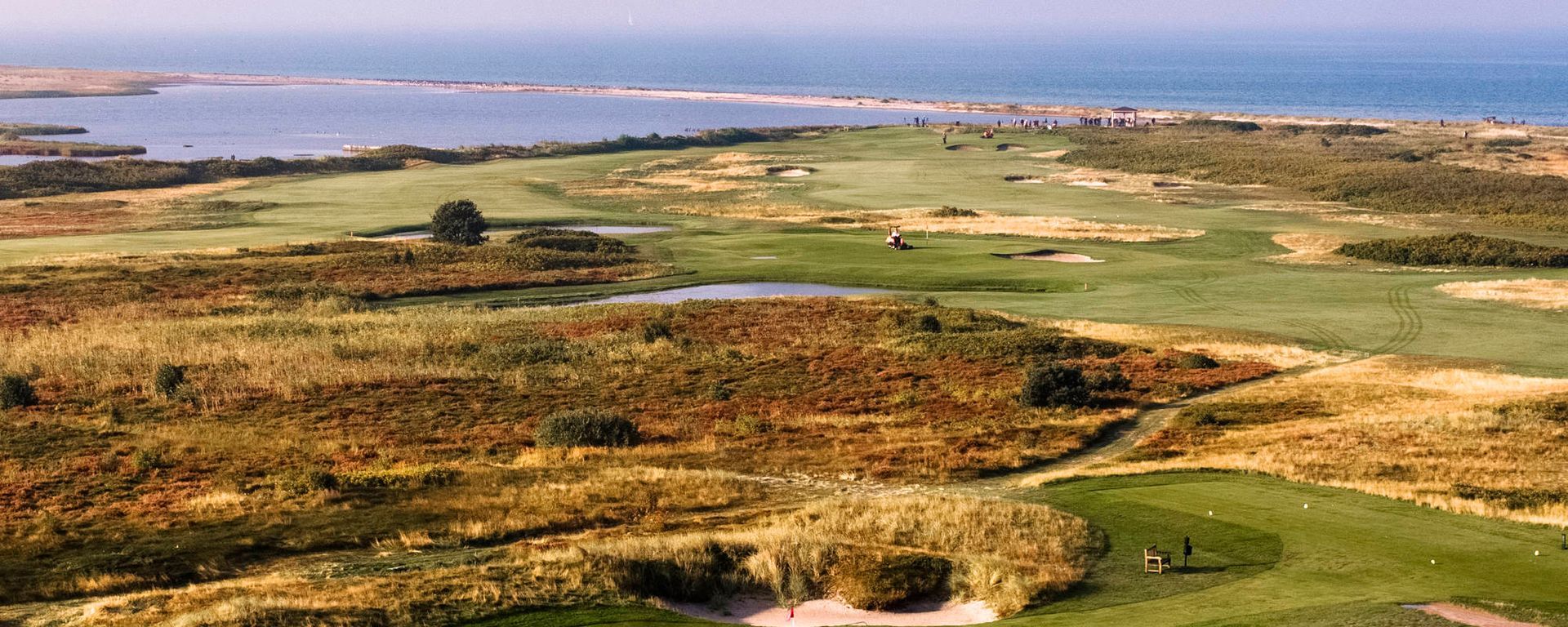
Just south of Malmö sits Falsterbo Golfklubb, one of the oldest and most genuine links courses in continental Europe. It runs out along a low peninsula where the land barely rises above the sea, a lighthouse standing guard, migrating birds overhead. It plays the way a links should — firm, running, honest — and it rewards the golfer who thinks rather than the one who simply hits. Few outside Scandinavia have heard of it. Fewer still have played it. It is one of my favourite quiet surprises to hand a guest who thinks they have seen every kind of links.
Then there is Bro Hof Slott near Stockholm — Sweden's most celebrated course, a dramatic modern layout on the shore of Lake Mälaren that has hosted the country's biggest professional events. It is a different pleasure entirely: manicured, muscular, cinematic. Set against a castle and mirrored water, it is the kind of place that makes a group of seasoned players go quiet on the first tee.
Sweden's gift is variety — raw links in the south, polished championship golf near the capital, and endless forest-and-lake courses in between where you may not see another group all afternoon.
Norway: the round you will talk about for the rest of your life

And then there is the reason people fall in love with this part of the world.
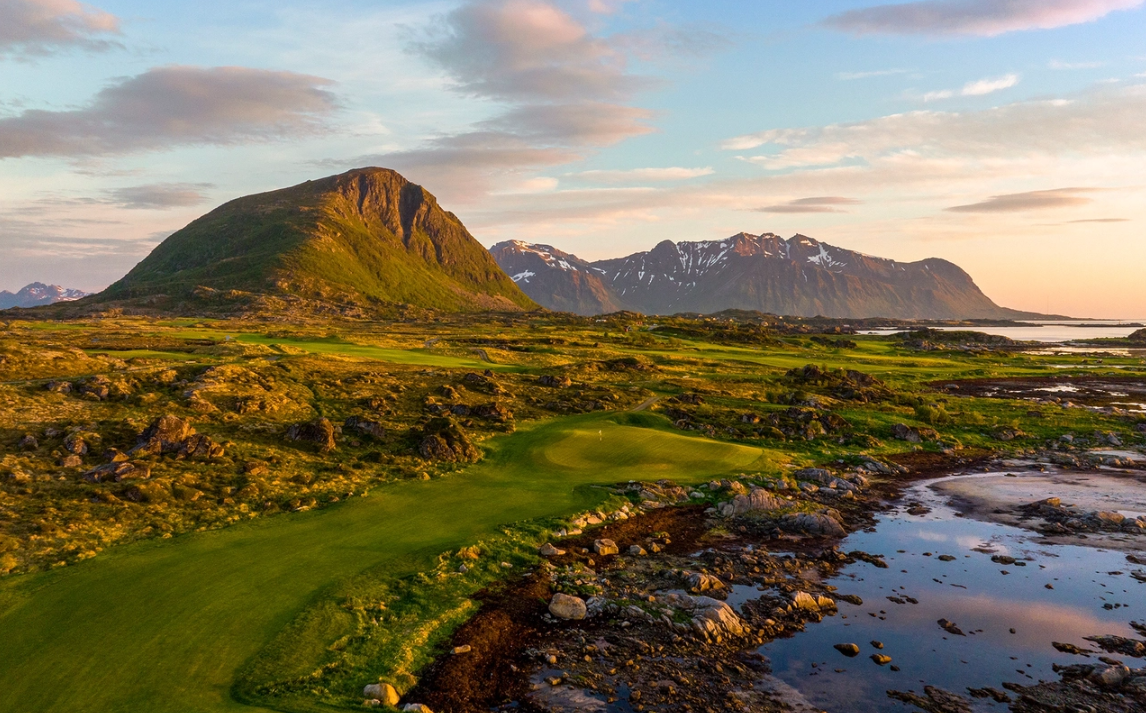
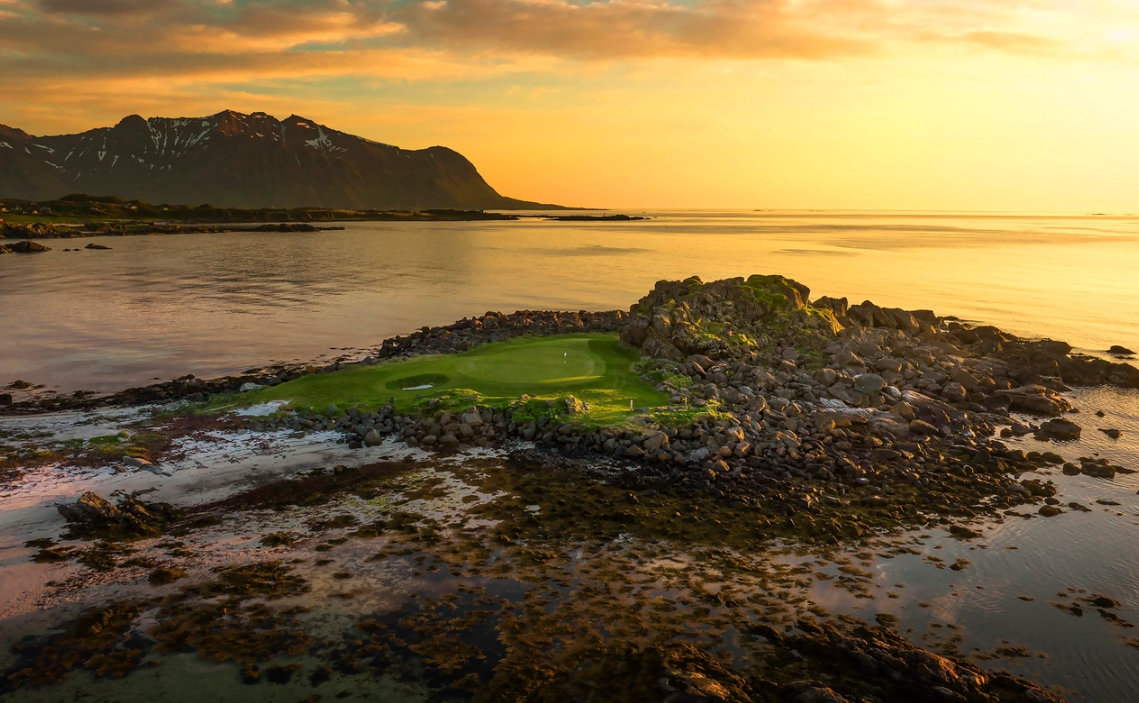
Lofoten Links sits on the island of Gimsøya, at 68 degrees north — well above the Arctic Circle. It is a true links: sand dunes, white beaches doing the work of bunkers, the sea pressing in from almost every side, and, remarkably, two ancient Viking graves resting between the fairways. It is ranked among the top 100 courses in the world, and unlike any of the others on that list, it offers something no course anywhere else can.
From mid-May to late July, the sun does not set.
You can tee off at midnight in full daylight. Play a round after dinner and finish as the clock passes one in the morning, the light turned to warm amber, the mountains of the Lofoten wall glowing across the water. Guests have played through the night here — one completed seven and a half rounds in a single twenty-four-hour stretch. You need not go that far. But to stand on that course at midnight, wide awake, club in hand, is to understand why some rounds of golf stop being golf and become something you simply keep for the rest of your life.
This is the course I save for the guest who says they have done it all. They have not done this.
Beyond the golf: the whole reason to come

A tour is never only the eighteen holes, and in Scandinavia the surrounding experience is not a supporting act — it is half the reason to be here.
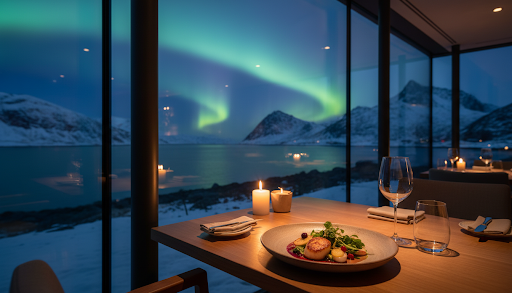
You will eat astonishingly well. New Nordic cooking reshaped fine dining for a generation, and its influence runs from Copenhagen's harbour restaurants down to the fishing villages of Lofoten, where the seafood was swimming that morning. Picture a long dinner after a late round: langoustine, aquavit, the light still hanging in the sky at eleven.
You will stay somewhere with a point of view — a design hotel in Copenhagen, a lakeside lodge in the Swedish forest, a set of glass-fronted cabins on the Lofoten shore where the aurora arrives once the midnight-sun weeks give way to autumn. And you will move through a part of the world where the landscape does the heavy lifting: fjords, archipelagos, mountains dropping straight into the sea.
It is escape in the fullest sense. No noise. No obligation. Just golf, good company, extraordinary food, and light that seems to last as long as you want the day to.
What you cannot arrange from a website
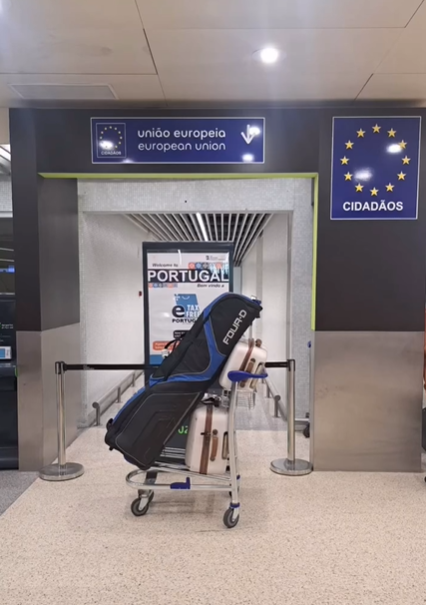
Here is the honest part. Scandinavian golf is not plug-and-play. The best tee times at Lofoten and Falsterbo are limited and go early. The logistics — flights into the right regional airports, transfers across islands, the timing of the midnight-sun window down to the specific fortnight — reward someone who has done it before and gets it wrong for no one.
That is the work I do, and I do it properly. I have walked these courses. I know which clubhouse to end the evening in, which lodge has the view worth paying for, and how to hold a midnight tee time so your group plays that round on the night the forecast is kind. When something moves — a flight, a booking, the weather — you will not be the one solving it. That is my job, and I take it personally.
It is also, quite simply, why my guests come back. A tour should feel like it was arranged by someone who cares whether you enjoy it. Because I do.
Your next escape
The midnight-sun window is short — a handful of weeks each summer — and the courses that make Scandinavia unforgettable do not hold space for long. If a golf trip unlike any you have taken before appeals to you, now is the time to start the conversation.
Tell me how you like to play and who you are bringing, and I will design an itinerary across Denmark, Sweden and Norway that is yours alone.
Begin at
www.golfescapetravel.com — and let's plan a round you will still be talking about years from now.
Recent Posts